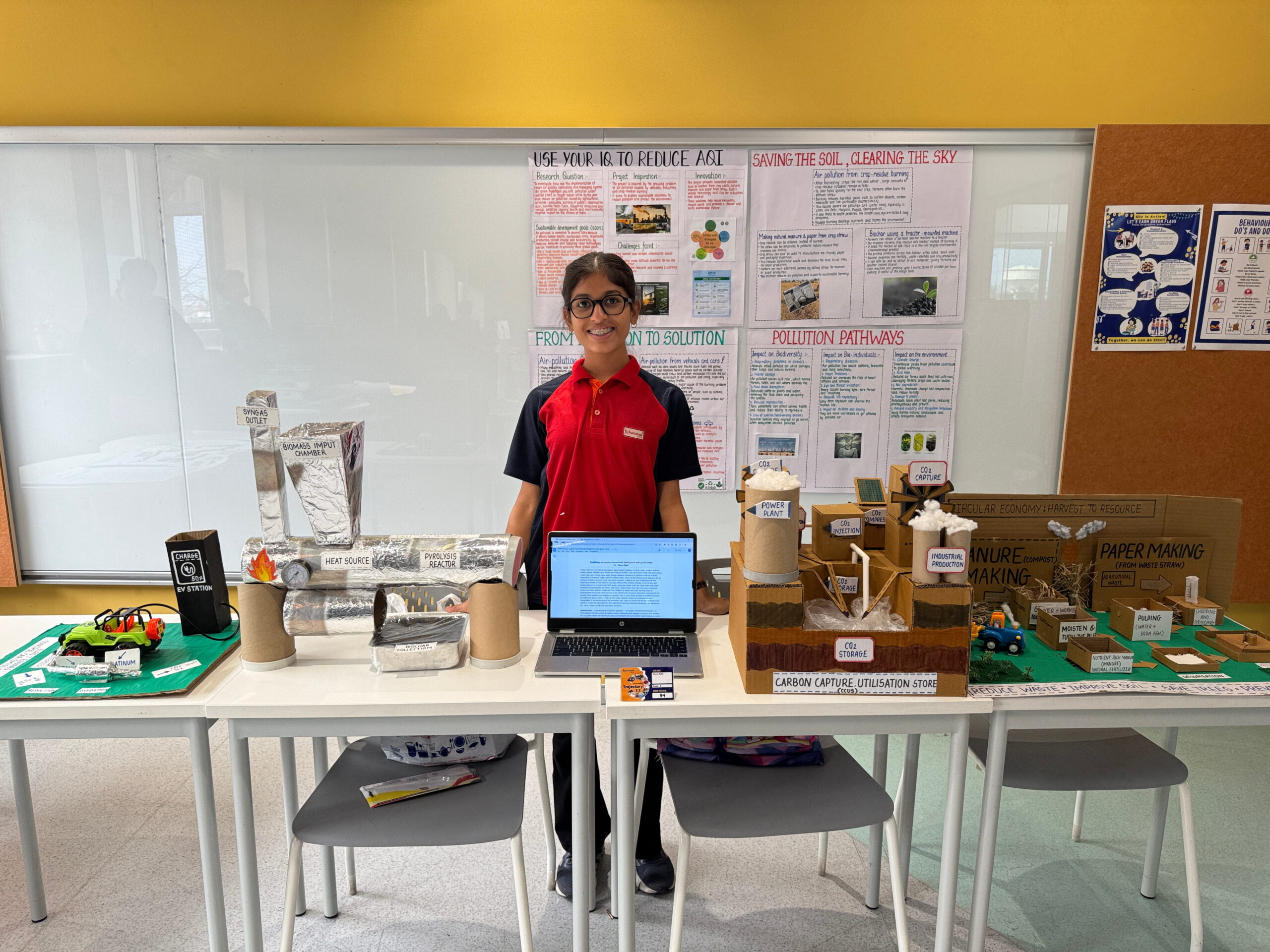
By: Durva Patel
Project Description:
Durva Patel’s individual Humanities project addresses the critical issue of air pollution in rapidly growing urban environments. The project explores how expanding infrastructure—such as highways, industries, construction, and increased vehicular use—contributes to deteriorating air quality, and how this impacts human health, climate change, biodiversity, and overall sustainability. The work is aligned with the United Nations Sustainable Development Goals (SDGs), particularly those related to good health and well-being, clean air, and sustainable cities.
Project Focus & Approach:
Instead of relying solely on artificial intelligence, the project emphasizes a balanced and practical approach to improving air quality through a combination of green infrastructure, clean technologies, responsible policymaking, and active citizen participation.
Durva conducted in-depth research into major sources of pollution, including vehicle emissions, agricultural burning, and industrial outputs, and proposed multi-dimensional solutions such as:
– Adoption of advanced vehicle technologies like Euro 7 engines to reduce emissions
– Sustainable agricultural practices to manage crop residue and prevent burning
– Implementation of CCUS (Carbon Capture, Utilization, and Storage) to reduce industrial carbon emissions.
– Expansion of urban green cover and development of mini forests to naturally absorb pollutants
Project Outcome:
The project presents a well-researched, conceptual, and model-oriented study that demonstrates a comprehensive understanding of environmental challenges and solutions. It also highlights the importance of collaboration among stakeholders such as government bodies, industries, environmental agencies, and citizens. Through this work, Durva has shown strong research skills, systems thinking, and awareness of real-world environmental issues, along with the ability to propose sustainable and actionable solutions for improving air quality.